Fine lines, acne scars, and dark spots are three of the most common reasons patients seek treatment, and they are frequently treated as if they were one problem. They are not. Each has a different underlying cause, and each responds to a different tool. That mismatch is the usual reason someone finishes a course of treatment and feels the result did not justify the cost.
This guide explains what actually causes each concern, which treatments address it, and how to sequence them sensibly.
Why these three concerns need different treatments
Fine lines come from two things happening at once: collagen and elastin decline with age, and repeated facial movement etches lines into skin that has lost its ability to spring back.
Acne scars are a structural problem. When a breakout damages the dermis, the skin repairs itself imperfectly and leaves an indentation. Importantly, the flat brown or red marks left behind after a pimple are not scars at all. They are post-inflammatory pigmentation, and they resolve on a completely different timeline with completely different treatment.
Hyperpigmentation is an overproduction of melanin, triggered by ultraviolet exposure, inflammation, hormones, or injury to the skin.
A treatment that stimulates collagen will do very little for pigment. A treatment that targets pigment will do very little for a depressed scar. Knowing which problem you actually have is most of the work.
Best treatments for fine lines and early aging
The goal here is to rebuild collagen.
Microneedling. Fine needles create controlled micro-channels that trigger the body’s wound-healing response, which in turn stimulates new collagen and elastin. It suits early fine lines, crepey texture, and enlarged pores. Most patients need a series of three to six sessions spaced four to six weeks apart.
Radiofrequency microneedling. This adds radiofrequency energy to the microneedling channels, delivering heat into the deeper dermis. The heat tightens existing collagen and stimulates more of it than microneedling alone. It is the better choice when there is mild laxity alongside fine lines, particularly along the jawline and lower face.
CO2 fractional resurfacing. The most significant of the three. A fractional carbon dioxide laser removes microscopic columns of damaged skin and prompts substantial remodeling as the surrounding tissue heals. It addresses deeper lines and sun damage that microneedling cannot reach. It also carries the most downtime, which is worth planning around.
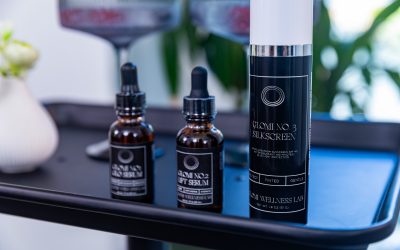
Medical-grade skincare. Retinoids, peptides, growth factors, and antioxidants support collagen between treatments and slow further breakdown. This is the part that determines how long an in-office result lasts.
Best treatments for acne scars and texture
First, identify what you are treating. Rolling and boxcar scars, the soft-edged and sharp-edged depressions, respond well to collagen stimulation. Icepick scars, which are narrow and deep, are the most stubborn and often need a different approach entirely.
Microneedling is a reliable first-line option for rolling and shallow boxcar scarring, building collagen underneath the depression to lift it toward the surrounding skin.
Radiofrequency microneedling reaches deeper and is generally the stronger option for established scarring, because the added thermal energy drives more remodeling at the level where the scar actually sits.
CO2 fractional resurfacing is the most aggressive option for significant textural scarring, resurfacing the skin while stimulating deep collagen remodeling.
Medical-grade chemical peels accelerate cellular turnover, which improves surface irregularity and fades the post-inflammatory pigmentation that often accompanies scarring.
Barrier repair skincare. Skin with a compromised barrier tolerates treatment poorly and heals slowly. Restoring the barrier first often makes everything that follows work better.
Acne scarring is a project rather than an appointment. Meaningful improvement generally takes a series of treatments over several months, and the honest goal is significant improvement rather than erasure.
Best treatments for hyperpigmentation and dark spots
Intense pulsed light photofacial treatments. For sun-induced pigmentation, freckling, and the brown spots that accumulate over years of outdoor living, IPL is usually the most direct tool. Broad-spectrum light is absorbed by the pigment, which then breaks up and clears.
Medical-grade chemical peels accelerate turnover and lift surface pigment, and they are useful for post-inflammatory pigmentation and general dullness.
Brightening skincare. Vitamin C, niacinamide, tranexamic acid, azelaic acid, and prescription-strength options where warranted work by interrupting melanin production, which is what stops new pigment forming while existing pigment clears.
For a fuller account of the three pigmentation types and why they need different treatment, read hyperpigmentation and melasma, and why it comes back.
A necessary caution about melasma. Melasma is the symmetrical, patchy pigmentation most often seen across the cheeks, forehead, and upper lip, and it behaves differently from sun spots. It is hormonally influenced, it is heat-sensitive, and it recurs. Light and heat-based treatments can make it worse rather than better in some patients. Melasma needs a deliberately conservative plan, and any provider who proposes an aggressive laser for it without discussing this is not treating it correctly.
The step almost everyone skips
Daily broad-spectrum sunscreen is not an afterthought to these treatments. It is what determines whether the result holds.
This matters more on the San Diego coast than most patients assume. Life in Encinitas, Del Mar, Solana Beach, and La Jolla is lived outdoors, and the marine layer that greys over North County mornings in May and June is actively misleading, because ultraviolet A passes through cloud cover and through window glass. Skin does not register those days as sun exposure, so protection gets skipped on exactly the mornings people assume they are safe.
Treating pigment without daily protection means paying to remove pigment that is being replaced at the same time.
How long results actually take
- Pigment from peels or IPL: surface pigment often darkens before it clears, typically over one to two weeks, with a series needed for even tone.
- Texture and fine lines from microneedling: early improvement within a few weeks, with collagen remodeling continuing for three to six months after a series.
- Acne scarring: several months, across multiple sessions.
- Skincare alone: most regimens are evaluated at twelve weeks.
Individual results vary, and the right plan depends on your skin type, your history, and how your skin responds along the way.
How these treatments are delivered at Glomi Wellness Lab
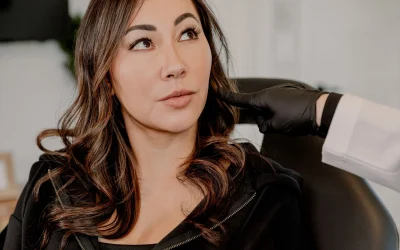
Glomi Wellness Lab is a concierge practice, so treatment happens at your home or office rather than at a clinic. Dr. Kristin Dean, MD, a physician board-certified by the American Board of Family Medicine, assesses your skin and builds the plan around what she finds.
The concierge model matters more than usual for this category of treatment, because resurfacing and peels involve a visible recovery window. Peeling and redness are considerably easier to manage at home than in a clinic waiting room or on the drive back from one.
Frequently asked questions
Which treatment should I start with?
That depends on which concern bothers you most and on what your skin can tolerate. As a general rule, pigment is addressed before texture, because inflammation from resurfacing can worsen existing pigmentation. A skin assessment settles the order.
Can I treat fine lines, acne scars, and pigmentation at the same time?
Often yes, but sequenced rather than simultaneous. Combining several aggressive treatments in one session raises the risk of prolonged inflammation, which in darker skin types can itself trigger new pigmentation.
Are dark marks left after acne actually scars?
Usually not. Flat brown or red marks are post-inflammatory pigmentation, and they fade with pigment-directed treatment and sun protection. True scars are indentations you can feel, and those need collagen stimulation.
Will one treatment be enough?
Rarely. Almost every option here works through a series, because collagen remodeling and pigment clearance both happen gradually. Any provider promising a single-session fix for scarring or pigmentation is overselling.
Does treatment work on all skin tones?
Yes, but the choice of treatment and the settings used must account for skin type. Deeper skin tones carry a higher risk of post-inflammatory pigmentation, which makes conservative settings and an experienced eye more important, not less.
Do I need to stop my skincare before treatment?
Usually retinoids and exfoliating acids are paused for several days beforehand, and you will be given specific guidance based on your regimen and the treatment planned.
Build a plan around your skin
If you would like a plan built around what your skin actually needs rather than assembled from articles, call Glomi Wellness Lab at (442) 222-8485 or email scheduling@glomiwellnesslab.com to arrange a complimentary consultation anywhere in San Diego County.
Related treatments at Glomi Wellness Lab
Glomi Wellness Lab is a physician-led concierge practice. Dr. Kristin Dean, MD travels to you across San Diego County, including Encinitas, La Jolla, Del Mar, Solana Beach, Rancho Santa Fe, and Carmel Valley. There is no clinic to drive to and no waiting room.
To arrange a complimentary consultation, call (442) 222-8485 or email scheduling@glomiwellnesslab.com.