Retinol has more evidence behind it than almost anything else you can put on your skin. It also has the highest abandonment rate, and the two facts are connected. Most people quit not because it failed, but because they started too strong, too often, and their skin revolted in week two.
The product is rarely the problem. The introduction is.
What retinoids actually do
Retinoids are vitamin A derivatives. Only one form is biologically active in the skin, retinoic acid, and everything else has to convert into it.
Once converted, retinoic acid binds to receptors in skin cells and changes their behavior. It accelerates cell turnover, so dull surface cells shed faster. It normalizes how skin cells shed inside the pore, which is why it helps acne. And over months it increases collagen production in the dermis, which is what softens fine lines rather than simply exfoliating them.
That last effect is the important one, and it is also the slow one. Surface brightness arrives in weeks. Collagen change takes months.
Retinol, retinoid, tretinoin: what the words mean
This terminology confuses almost everyone, and it matters because it determines strength.
Retinoid is the umbrella term for all vitamin A derivatives.
Retinol is the most common over-the-counter form. It requires two conversion steps in the skin to become retinoic acid, which makes it gentler and slower than prescription options.
Retinaldehyde sits between the two, needing only one conversion step.
Tretinoin is retinoic acid itself, prescription-only, requiring no conversion, and correspondingly stronger and more irritating.
Adapalene is a synthetic retinoid, available over the counter at lower strength, generally better tolerated and particularly useful for acne.
Stronger is not better. The best retinoid is the strongest one your skin will tolerate consistently, and consistency is what produces results.
How to actually start
Here is the ramp that works for most people. It looks slow. It is faster than starting aggressively, reacting badly, and quitting.
Weeks one and two: twice a week, at night only.
Weeks three and four: every third night, if the first two weeks were uneventful.
Weeks five and six: every other night.
Week seven onward: increase toward nightly only if your skin is comfortable. Many people do very well at every other night indefinitely, and there is nothing wrong with stopping there.
If irritation appears at any stage, drop back to the previous frequency for two weeks rather than stopping altogether. Retreating is not failure; it is the method.
The application details that decide how this goes
- Apply to completely dry skin. Wait a full ten to twenty minutes after cleansing. Damp skin increases penetration and therefore irritation, and this is the single most common mistake.
- Use a pea-sized amount for the entire face. More product does not accelerate results; it accelerates irritation.
- Avoid the immediate eye area, the corners of the nose, and the corners of the mouth, where skin is thinner and folds.
- Moisturize afterward, or use the sandwich method described below.
Retinization: what is normal and what is not
Skin adjusting to a retinoid goes through a settling-in period, generally two to six weeks.
Normal: mild dryness and flaking, slight tightness, mild pinkness, temporary sensitivity, and a brief period where existing congestion surfaces faster than usual.
Not normal: burning, weeping or oozing, persistent bright redness, swelling, skin that stings when you apply plain moisturizer, or dermatitis around the mouth and eyes. Those indicate a compromised barrier rather than adjustment. Stop, repair with bland moisturizer for one to two weeks, and restart at a lower frequency.
Pushing through genuine barrier damage does not build tolerance. It extends the damage.
The buffering technique for sensitive skin
If your skin is reactive, apply a moisturizer such as Dermal Repair Cream first, then the retinoid on top, then moisturizer again. The retinoid still works; it simply arrives more gradually.
Purists object that this reduces potency. In practice, a slightly reduced dose used consistently for a year beats a full dose abandoned in three weeks.
What not to combine it with
- Exfoliating acids on the same night. Both increase turnover. Together they frequently exceed what the barrier can repair. Alternate nights instead.
- Vitamin C in the same routine step. Use vitamin C in the morning and the retinoid at night. They are not enemies, but they suit different times of day.
- Benzoyl peroxide simultaneously, which can deactivate some retinoids. Separate them morning and night.
- Physical scrubs. Skin already turning over faster does not need manual abrasion.
- Waxing or dermaplaning while using a retinoid. Pause it for five to seven days beforehand; skin lifts more easily than you expect.
Sun protection is not optional here
Retinoids increase photosensitivity, and new skin arriving at the surface faster is more vulnerable to ultraviolet damage. Using a retinoid without daily broad-spectrum protection undoes much of what it is doing.
On the San Diego coast this deserves emphasis, because the marine layer over Encinitas, Del Mar, and Solana Beach is misleading. Ultraviolet A passes through cloud and through window glass, so the overcast May and June mornings that feel safe are not. Daily protection matters year-round here in a way it does not everywhere.
Who should not use a retinoid
Retinoids are avoided during pregnancy and while trying to conceive, and generally while breastfeeding. If any of those apply, speak to your physician; there are alternatives for tone and texture.
Active eczema, rosacea flares, and significantly compromised barriers need addressing first. Recent resurfacing, peels, or microneedling require a pause. And if you use prescription topicals or oral acne medication, the plan should be coordinated rather than layered.
When to expect results
- Weeks two to six: the adjustment period. Skin may look worse before better.
- Weeks six to twelve: smoother texture, improved brightness, more even tone.
- Three to six months: visible improvement in fine lines as collagen remodeling accumulates.
- Twelve months and beyond: the results retinoids are actually known for.
Individual results vary, and consistency over months is what separates outcomes far more than product strength.
Where a physician helps
Choosing a starting strength, deciding whether prescription-strength is appropriate, and telling the difference between normal retinization and a damaged barrier are all judgment calls that benefit from an experienced eye.
At Glomi Wellness Lab, Dr. Kristin Dean, MD, a physician board-certified by the American Board of Family Medicine, assesses your skin and builds the regimen around it, including prescription-strength formulas where warranted. Because Glomi is a concierge practice, that happens at your home or office anywhere in San Diego County.
Retinoids also work considerably better alongside in-office treatment. Microneedling and medical-grade chemical peels hold their results longer when supported by consistent daily care. See the full approach on the Glomi Skincare page, and read how to layer your skincare for where a retinoid sits in the order.
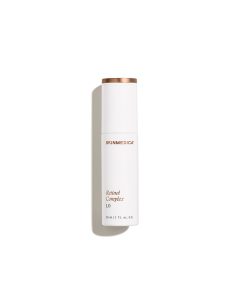
The Retinol Complex Dr. Dean supplies is available through the Glomi online store, alongside the HA5 Hydra Collagen Hydrator that many patients use to buffer it.
Frequently asked questions
How long does it take for retinol to work?
Texture and brightness generally improve between six and twelve weeks. Fine lines take three to six months as collagen remodels, and results continue improving beyond a year of consistent use.
Should I push through the purge?
Mild flaking and some congestion surfacing are normal and worth continuing through at a reduced frequency. Burning, weeping, swelling, or skin that stings under plain moisturizer are not a purge, they are barrier damage, and you should stop and repair.
Can I use retinol every night?
Eventually, many people can, but almost nobody should start there. Build up over six to eight weeks. Every other night, sustained, outperforms nightly use that you abandon.
Can I use retinol and vitamin C together?
Yes, but split them: vitamin C in the morning, retinoid at night. That reduces irritation and suits how each performs.
Is prescription tretinoin better than over-the-counter retinol?
Stronger, not automatically better. Tretinoin is retinoic acid and needs no conversion, so it acts faster and irritates more. The right choice depends on your skin, your tolerance, and what you are treating.
Can I use retinol if I am pregnant?
No. Retinoids are avoided in pregnancy, while trying to conceive, and generally while breastfeeding. Speak to your physician about alternatives.
Start it properly
If you would like a retinoid chosen for your skin and a plan for introducing it without the miserable fortnight, call Glomi Wellness Lab at (442) 222-8485 or email scheduling@glomiwellnesslab.com to arrange a complimentary consultation anywhere in San Diego County.