Pigmentation is the concern patients most often treat successfully and then watch return. That pattern is not a failure of the treatment. It usually means the type was misidentified, or the trigger was never removed.
There are three common kinds of facial pigmentation, they behave differently, and one of them can be made worse by the treatment that works best on the others. Knowing which you have is most of the work.
The three types, and how to tell them apart
Sun-induced pigmentation
Discrete brown spots with fairly defined edges, appearing on the areas that catch the most light: cheekbones, forehead, nose, upper lip, the backs of the hands, the chest. They accumulate over years and they do not fluctuate much month to month.
Post-inflammatory hyperpigmentation
Flat brown, grey, or red marks left exactly where something happened: a spot, a scratch, an ingrown hair, a burn. The give-away is that the mark maps precisely onto a previous injury. It is not a scar; there is no change in texture, only in color.
Melasma
Larger, symmetrical, blotchy patches with soft, poorly defined edges, typically across the cheeks, forehead, upper lip, and jawline. It usually appears on both sides in a broadly mirrored pattern, and it fluctuates, worsening in summer and improving in winter.
That fluctuation is the clue. Sun spots do not come and go. Melasma does.
Why melasma is a different problem
Melasma is not simply sun damage. It is a chronic condition with hormonal and vascular components, influenced by estrogen and progesterone, which is why it commonly appears in pregnancy and with hormonal contraception.
Two things make it genuinely difficult.
It responds to heat, not only light. Infrared and ambient heat can trigger it. That means hot yoga, saunas, cooking over a hot stove, and sitting too close to a fire can all provoke a flare in someone whose sun protection is otherwise perfect.
It responds to visible light. Ordinary daylight, and to a lesser extent screens, can drive melasma even when ultraviolet is fully blocked. Standard clear sunscreen does not filter visible light.
And critically, aggressive light and heat-based treatment can make melasma worse. Treatments that work beautifully on sun spots can provoke a rebound that leaves the patient darker than before. Any provider who proposes an aggressive laser for melasma without discussing this is not managing it properly.
What works, by type
For sun-induced pigmentation
Intense pulsed light photofacial treatments are usually the most direct option. Broad-spectrum light is preferentially absorbed by the pigment, which then darkens, rises, and flakes away over roughly one to two weeks. Medical-grade chemical peels also lift surface pigment effectively and address texture at the same time.
For post-inflammatory pigmentation
Time and consistency do much of the work here, since PIH generally fades on its own over months. Peels and brightening topicals accelerate it. The most important intervention is treating whatever caused the inflammation, because new marks will keep appearing otherwise.
For melasma
Conservative and topical-led. Prescription-strength options where warranted, rigorous protection from light and heat, and gentle treatment rather than aggressive resurfacing. The realistic goal is control and long remission, not permanent cure. Framing melasma as a chronic condition to be managed, rather than a spot to be removed, is the single most useful shift a patient can make.
The topical ingredients that actually matter
- Tranexamic acid. Particularly useful in melasma, as it addresses the vascular component that most brighteners ignore.
- Niacinamide. Interrupts the transfer of pigment to skin cells, and is well tolerated by nearly everyone.
- Azelaic acid. Effective and, notably, generally considered acceptable in pregnancy, which matters given how often melasma appears then.
- Vitamin C. Antioxidant protection plus modest brightening, best used in the morning.
- Hydroquinone. Effective and prescription-strength in meaningful concentrations. It is used in cycles rather than continuously, under supervision.
- Retinoids. Increase turnover so pigment clears faster, and improve penetration of everything else.
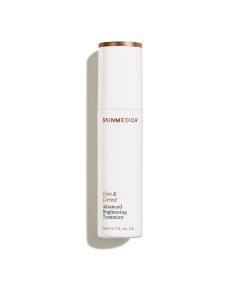
Even & Correct Advanced Brightening Treatment combines niacinamide and tranexamic acid and is both hydroquinone-free and retinol-free, which makes it usable by patients who cannot take either.
Under-eye darkness is usually not pigmentation at all
This is worth separating out, because it is treated wrongly more often than anything else on this list.
Dark circles have at least three distinct causes. Some are genuinely pigment, more common in richer skin tones and often familial. Some are vascular, where thin skin reveals the blood vessels beneath and produces a blue or purple cast rather than a brown one. And some are structural, where a hollow beneath the eye casts a shadow that reads as darkness under overhead light.
Only the first responds to brightening treatment. Vascular darkness may improve with products that support barrier thickness, such as Instant Bright Eye Cream, but will not clear with pigment-directed treatment. Structural shadowing is a volume problem, and no cream addresses it.
A simple test: press gently on the area, or look at it in flat light rather than overhead light. Darkness that largely disappears is shadow, not pigment.
The step that decides whether any of it holds
Treating pigment without daily protection is paying to remove something that is being replaced at the same time.
Two details matter more than most patients realize.
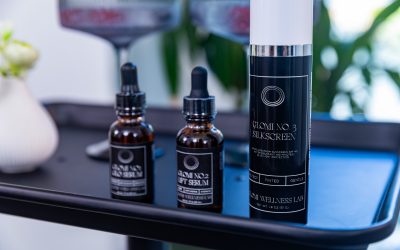
Tinted sunscreen outperforms clear for pigmentation. The iron oxides that provide the tint also block visible light, which clear formulas do not. For melasma in particular, a tinted mineral sunscreen is meaningfully better protection, not merely cosmetic preference. Glomi No.3 Silkscreen is a tinted mineral sunscreen at broad spectrum SPF 40 with blue light protection, which is precisely the specification this concern calls for.
The coastal marine layer is misleading. Life in Encinitas, Del Mar, Solana Beach, La Jolla, and Rancho Santa Fe is lived outdoors, and the grey mornings that roll over North County in May and June still deliver ultraviolet A, which passes through cloud and through window glass. Skin does not register those days as exposure, so protection gets skipped on exactly the mornings people assume they are safe.
A note on darker skin tones
Richer skin tones produce more melanin and are more prone to post-inflammatory pigmentation, which changes the calculation. Any treatment that provokes inflammation can itself cause the pigmentation it was meant to treat.
That is not a reason to avoid treatment. It is a reason for conservative settings, gradual progression, and a provider who treats it as a first-order consideration rather than an afterthought.
What the timeline actually looks like
- After IPL: spots darken within days, then flake away over one to two weeks. A series is usually needed.
- After peels: improvement over two to four weeks per treatment, in a series.
- Topicals alone: assessed at twelve weeks, not before.
- Melasma: improvement over months, with maintenance ongoing.
Individual results vary considerably, and pigmentation is one of the concerns where patience genuinely changes outcomes.
Concierge treatment across San Diego County
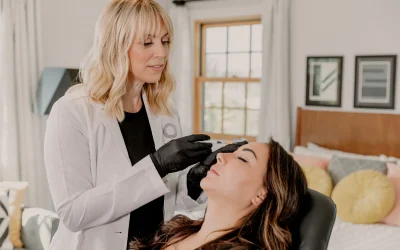
Dr. Kristin Dean, MD, a physician board-certified by the American Board of Family Medicine, assesses the type of pigmentation before proposing treatment, which is the step most often skipped. Glomi Wellness Lab is a concierge practice, so both the assessment and the treatment happen at your home or office anywhere in San Diego County.
For this concern in particular there is a practical advantage: after IPL or a peel, pigment darkens visibly before it clears. Spending those days at home rather than commuting through them is genuinely easier.
Frequently asked questions
How do I know if I have melasma or sun spots?
Melasma tends to be symmetrical, blotchy, soft-edged, and fluctuates with season and hormones. Sun spots are discrete, defined, and stable. If it changes through the year, suspect melasma and treat conservatively.
Will IPL clear my melasma?
It may lighten it temporarily and it can also worsen it. Light and heat-based treatment carries a real risk of rebound in melasma. It is not the first-line choice, and it should never be used without that conversation.
Why does my pigmentation keep coming back?
Usually one of three reasons: daily protection is not consistent, the type was misidentified and treated with the wrong tool, or it is melasma, which recurs by nature and needs ongoing management.
Can I treat pigmentation while pregnant?
Options are limited but not absent. Azelaic acid is generally considered acceptable, and rigorous sun protection helps considerably. Retinoids and hydroquinone are avoided. Discuss any regimen with your obstetrician.
Does hydroquinone work, and is it safe?
It is effective and, used correctly under supervision in cycles rather than continuously, it has a long clinical track record. It is not a product to use indefinitely without oversight.
How long until I see a difference?
Pigment lifted by IPL or a peel visibly changes within one to two weeks. Topical regimens are assessed at twelve weeks. Melasma is measured in months and managed ongoing.
Get the type identified first
The most useful step is establishing which kind of pigmentation you actually have before spending anything on treating it. Call Glomi Wellness Lab at (442) 222-8485 or email scheduling@glomiwellnesslab.com to arrange a complimentary consultation anywhere in San Diego County.