Microneedling is one of the most widely used treatments in medical aesthetics, and one of the most misunderstood. It is often described as a facial, which undersells it, or as a resurfacing laser, which oversells it. It is neither.
This guide explains what microneedling actually does, what it treats well, what it does not treat, and how to judge whether it is the right choice for your skin.
What is microneedling?
Microneedling, also called collagen induction therapy, uses a medical device with fine sterile needles to create thousands of controlled micro-channels in the skin.
Those micro-channels are injuries, deliberately. The skin responds the way it responds to any injury, by activating a wound-healing cascade that produces new collagen and elastin. The treatment does not add anything to the skin. It prompts the skin to rebuild its own structural proteins, which is why results appear gradually and continue developing for months.
Needle depth is adjusted by area and by concern. Delicate skin around the eyes is treated shallowly; established acne scarring on the cheek needs considerably more depth. Depth is a clinical decision, and it is the main reason outcomes vary between providers using identical equipment.
What microneedling treats well
- Fine lines and early wrinkles, particularly those caused by collagen loss rather than muscle movement.
- Rolling and shallow boxcar acne scars, by building collagen beneath the depression.
- Uneven texture and roughness.
- Enlarged pores, which appear smaller as the surrounding skin firms.
- Crepey skin and early laxity.
- Overall dullness, through increased cell turnover.
- Some post-inflammatory pigmentation, as turnover increases and pigment clears.
What microneedling does not treat
Being clear about this saves money and disappointment.
It will not soften expression lines caused by muscle movement. Forehead lines and crow’s feet come from muscle activity, and collagen stimulation does not address the cause. That is what wrinkle relaxers are for.
It will not correct significant volume loss. Hollow cheeks and deep folds are a structural problem that needs volume replaced.
It is a poor choice for icepick scars, which are narrow and deep and generally need a different technique.
It is not appropriate over active acne, because needling across inflamed lesions can spread bacteria and worsen breakouts. Active acne is treated first.
And it will not deliver the change that CO2 fractional resurfacing delivers. Microneedling is the gentler, lower-downtime option, and that tradeoff is real in both directions.
Microneedling or radiofrequency microneedling?
This is the most useful question most patients have not thought to ask.
Standard microneedling works purely mechanically. It suits early aging, texture, pores, and mild scarring, and it carries the least downtime.
Radiofrequency microneedling delivers radiofrequency energy through the needles into the deeper dermis. The heat contracts existing collagen immediately and stimulates substantially more new collagen than needling alone. It is the stronger choice where there is genuine laxity, more established scarring, or a jawline that has begun to soften.
The tradeoff is intensity. Radiofrequency microneedling is a more significant treatment with a longer recovery. Which one suits you depends on what you are treating and how much downtime you can accommodate, and that is a conversation for the assessment.
What the appointment involves
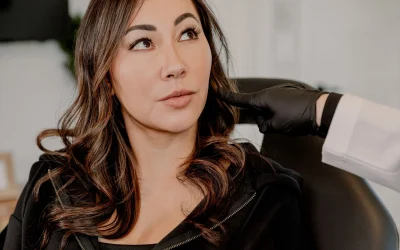
Assessment. Skin type, concerns, medical history, current products, and any contraindications are reviewed, and treatment depth is planned.
Numbing. A topical anesthetic is applied and left for roughly twenty to thirty minutes. Most patients describe the treatment itself as pressure and vibration rather than pain.
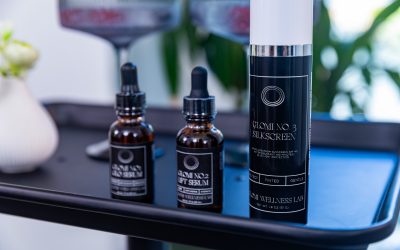
Treatment. The device passes over each area in a systematic pattern, typically taking twenty to thirty minutes for a full face. A topical serum may be applied while the channels are open, since absorption is temporarily increased.
Aftercare. Specific instructions are provided for your skin and the depth treated.
What recovery actually looks like
- Day of treatment: skin looks flushed, similar to moderate sunburn, and feels tight and warm.
- Day one to two: redness fades toward pink. Skin may feel rough or sandpapery.
- Day three to five: light flaking as turnover accelerates. Do not pick at it.
- Day five onward: skin generally looks normal, often with early brightness.
Deeper treatments and radiofrequency microneedling extend this timeline. Individual responses vary.
Aftercare that actually matters
For the first twenty-four hours, use only water or a bland cleanser, skip makeup, and avoid exercise, saunas, and hot showers, since heat increases inflammation. For roughly seventy-two hours, avoid retinoids, exfoliating acids, and vitamin C, which are too aggressive on a compromised barrier.
Sun protection is the one that determines your result. Freshly treated skin is highly vulnerable to ultraviolet exposure, and sun in the days after treatment can cause pigmentation on skin you have just paid to improve. That matters particularly on the San Diego coast, where the marine layer makes overcast mornings feel like protection they are not, since ultraviolet A passes straight through cloud.
How many treatments, and when to expect results
Most concerns need a series of three to six treatments spaced four to six weeks apart. Early improvement in texture and brightness is often visible within one to two weeks, but the meaningful collagen change is gradual and continues developing for three to six months after a series completes.
Acne scarring sits at the longer end and is measured in months. Individual results vary based on skin type, age, the concern being treated, and how consistently you support the result between sessions.
Who should not have microneedling
Treatment is deferred or avoided with active acne in the treatment area, active infection including cold sores, during pregnancy, with certain autoimmune or clotting disorders, and with recent isotretinoin use. A history of keloid scarring requires careful discussion. This is why a medical evaluation precedes treatment.
Concierge microneedling across San Diego County
Glomi Wellness Lab is a concierge practice, so microneedling is performed at your home or office. Dr. Kristin Dean, MD, a physician board-certified by the American Board of Family Medicine, serves patients across San Diego County, including Encinitas, La Jolla, Del Mar, Solana Beach, Rancho Santa Fe, and Carmel Valley.
For this treatment specifically, the model has a practical advantage. You finish looking flushed and feeling warm, and going straight to your own sofa is considerably better than driving home that way. You can read more about concierge microneedling or review current pricing.
Frequently asked questions
Does microneedling hurt?
With topical numbing, most patients describe pressure and vibration rather than pain. Bonier areas such as the forehead and jawline are more noticeable. Deeper treatments are more intense.
How is it different from a derma roller at home?
Professional devices use sterile single-use cartridges at controlled depths, applied by a trained provider after a medical assessment. Home rollers cannot control depth, are difficult to keep sterile, and can drag across the skin rather than puncturing cleanly, which risks scarring and infection.
Can I have microneedling if I have melasma?
Cautiously and sometimes. Melasma is inflammation-sensitive, and any treatment that provokes inflammation can worsen it. It requires a conservative plan and a provider who takes that seriously.
How soon can I wear makeup?
Generally after twenty-four hours. Applying makeup sooner introduces product into open channels, which raises the risk of irritation and breakouts.
Can I combine microneedling with injectables?
Yes, but usually not in the same session. Injectables are commonly scheduled one to two weeks apart from microneedling so that swelling and healing from one do not interfere with the placement or assessment of the other.
How long do the results last?
Collagen built through microneedling is your own, so improvement is durable, but aging continues. Most patients maintain with a session every three to six months, and results last considerably longer when supported by a proper daily skincare regimen.
Find out whether it suits your skin
Call Glomi Wellness Lab at (442) 222-8485 or email scheduling@glomiwellnesslab.com to arrange a complimentary consultation with Dr. Kristin Dean, MD, in your own home anywhere in San Diego County.
Related treatments at Glomi Wellness Lab
Glomi Wellness Lab is a physician-led concierge practice. Dr. Kristin Dean, MD travels to you across San Diego County, including Encinitas, La Jolla, Del Mar, Solana Beach, Rancho Santa Fe, and Carmel Valley. There is no clinic to drive to and no waiting room.
To arrange a complimentary consultation, call (442) 222-8485 or email scheduling@glomiwellnesslab.com.